Scientific revolutions spur industrial revolutions, which in turn drive economic progress. Enhancing innovation capabilities, fostering new quality productive forces, and promoting high-quality development have become the shared priorities for governments, universities, research institutions and businesses alike.
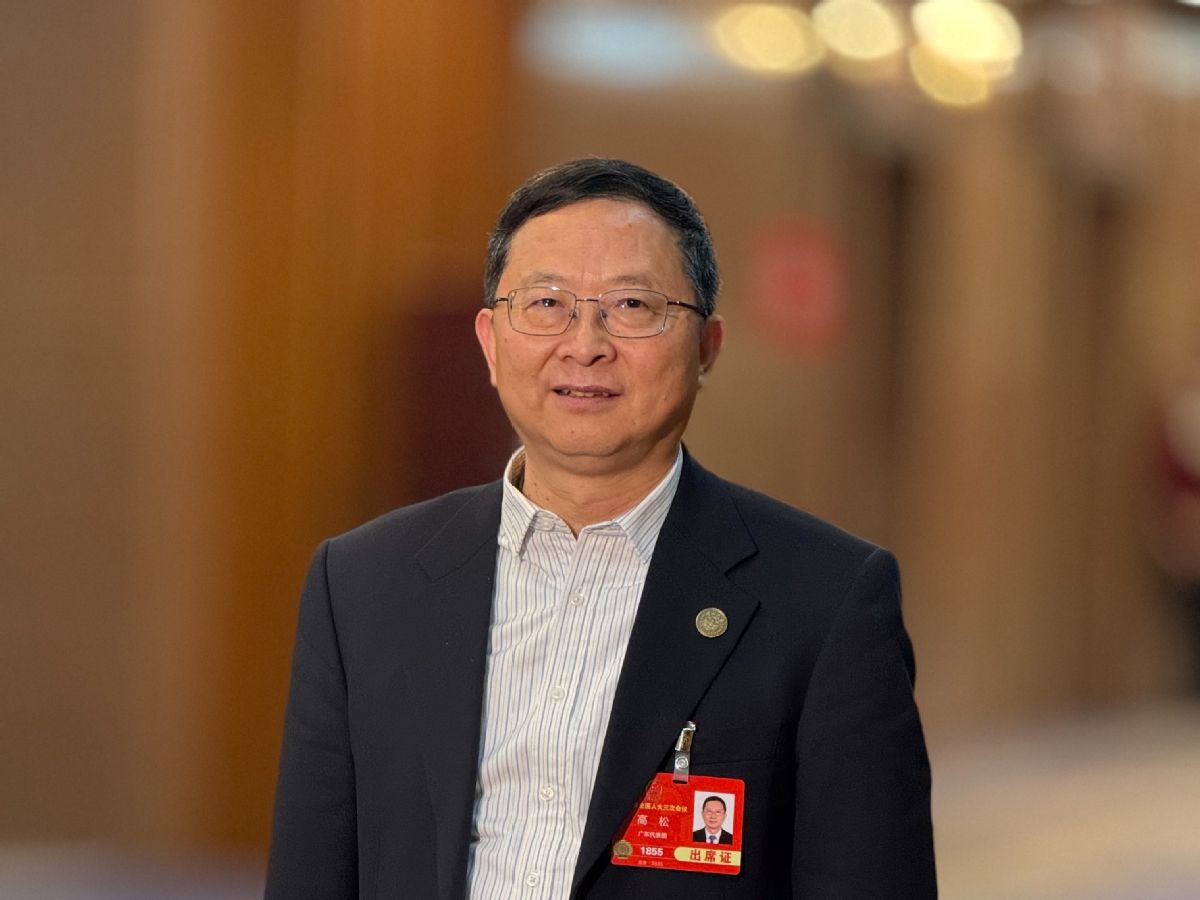
Gao Song, the president of Sun Yat-sen University and a deputy to the 14th National People's Congress
Universities, as engines of science and technological innovation and a major source of talents, play a crucial role in shaping industrial ecosystems and driving economic growth, and their deep interactions with local economies create a mutually beneficial cycle of progress. For example, Stanford University played a key role in the rise of Silicon Valley.
Similarly, the University of Science and Technology of China has been fueling Anhui province's technological progress, while Sun Yat-sen University, with its century-long legacy, has made significant contributions to Guangdong province's economic development.
Today, the Guangdong-Hong Kong-Macao Greater Bay Area (GBA) stands as one of China's most open and economically dynamic regions, with the Sun Yat-sen University both benefiting from and contributing to its growth. Hopefully, the university will continue playing its part in building the GBA into an international hub for technological innovation and talents, by not just conducting cutting-edge research but also ensuring its transformation into tangible productive forces.
The Sun Yat-sen University has been pursuing reforms in education, science and talent development, by systematically removing institutional hurdles to strengthen the innovation chain. A key strategy of the university has been the development of key projects, teams and platforms in collaboration with State-owned enterprises, listed companies and industry leaders to accelerate the commercialization of scientific research.
For instance, in 2024, the National Supercomputing Center in Guangzhou, operated by the university, launched the next-generation domestic supercomputing system, Tianhe Xingyi, which has transformed drug discovery in the biopharmaceutical sector, enabling AI-driven precision drug design and reducing drug development and animal testing cycles from two years to just 49 days. Multiple pharmaceutical companies have already incorporated this breakthrough into their R&D programs.
To further incentivize technology transfer, the Sun Yat-sen University has implemented an innovative profit-sharing policy, allocating commercialization revenue in a 7:1:1:1 ratio among inventors, the university, the operational platform, and relevant departments. This model not only safeguards the interests of researchers but also engages faculties and service institutions in the commercialization process. In 2024 alone, the university helped commercialize 888 technological achievements, a conversion rate of 29.7 percent.
The university has made impressive strides in research in fields such as pharmaceuticals, high-tech equipment, environmental solutions and energy materials. In the medical field, it has pioneered new treatment methods for cataract, glaucoma, gastrointestinal diseases, breast cancer, diabetes, and other conditions, leading to breakthrough anti-tumor and cough-suppressant drugs, with its cumulative technology transfer revenue exceeding 2 billion yuan ($275 million). Notably, the university's research on an Epstein-Barr virus vaccine, aimed at addressing the high incidence of nasopharyngeal carcinoma in Guangdong, has attracted significant investment, with enterprises committing 100 million yuan to joint development.
The university has also spearheaded research in smart high-tech equipment, including Zhuhaiyun, the world's first smart unmanned research ship, and Zhuhaiqin, a foldable, self-elevating deep-sea aquaculture platform. In has achieved success in the environmental and energy sectors, too, innovating urban tunnel safety control systems and intelligent water environment monitoring platforms to heavy metal pollution remediation materials and highly efficient wastewater nitrogen removal processes, several of which have earned the prestigious China Patent Excellence Award.
The university also prioritizes workforce development by forging partnerships with leading tech enterprises. The Sun Yat-sen University-Huawei "Smart Base" talent training program, launched in 2021 is one such standout project, which has integrated 34 courses and developed three new high-quality courses.
The university now plans to leverage its campuses across Guangzhou, Shenzhen, Zhuhai and Hong Kong to establish specialized innovation hubs based on the unique strengths of these cities. It is determined to play an even bigger role in bridging the gap between scientific breakthroughs and their commercialization. By fostering deeper industry collaborations, clearing institutional bottlenecks and embracing a results-driven approach to research, the Sun Yat-sen University is setting a new benchmark for transforming knowledge into real-world products and services.
The author is the president of Sun Yat-sen University and a deputy to the 14th National People's Congress.
Link to the report: https://www.chinadaily.com.cn/a/202503/11/WS67cfec1aa310c240449da283.html




 COPYRIGHT?1999-2017 , SUN YAT-SEN UNIVERSITY